The Profit Edge

The Profit Edge: Where Engineering Meets Net Margin
In the high-velocity world of E-commerce, revenue is a vanity metric; profit is the only reality. The Profit Edge is a specialized intelligence hub dedicated to the surgical deconstruction of E-commerce unit economics. We move beyond generic marketing advice to focus on the raw data architecture that defines market leaders. Here, we don’t discuss «how to sell more»—we engineer how to keep more.

Inside this category, you will find:

Unit Economic Audits: Precision analysis of COGS, shipping elasticity, and contribution margins.

Strategic Pricing Logic: Moving beyond fixed markups to dynamic, data-driven pricing models.

Inventory Intelligence: How to transform stagnant stock into liquid capital through predictive data.

The 1% Gains: Identifying the micro-leaks in your fulfillment and ad-spend that are silently draining your EBITDA.

This is not «business as usual.» This is the technical blueprint for founders who are ready to stop chasing top-line ghosts and start building a sovereign, high-margin machine.

Scaling with Data Intelligence: Operational Systems for High-Volume Retail

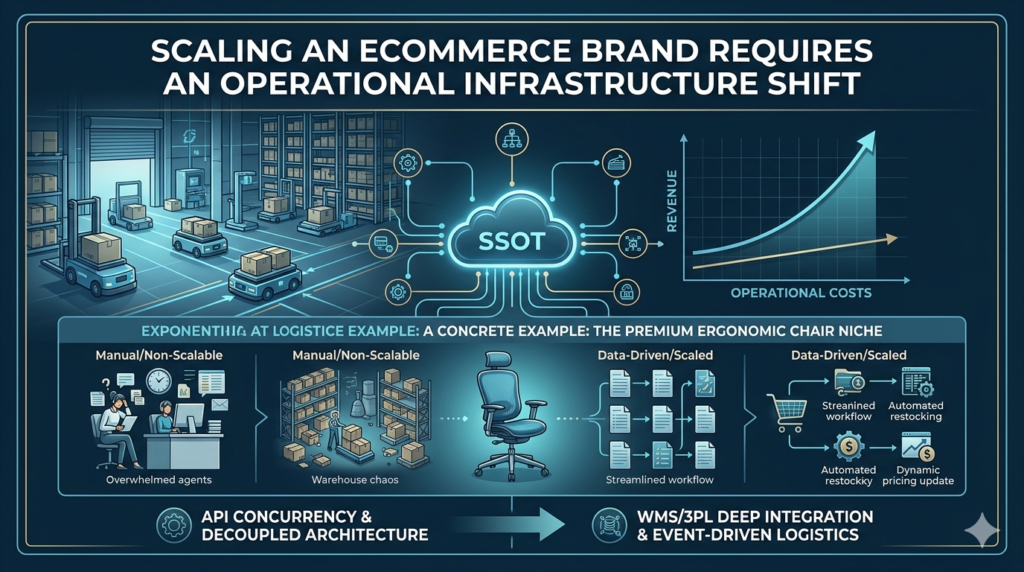
In high-volume businesses, scaling is not a linear sales process but a systems transition. Success depends on the ability to evolve from intuitive decision-making toward the use of Data Intelligence, allowing the operational infrastructure to support growth without collapsing net margins. 1. Key Data-Driven Strategies for Scaling To maintain efficiency during rapid expansion, integrating real-time […]

Scaling with Data Intelligence: Operational Systems for High-Volume Retail Leer más »

Scaling with Data Intelligence: The $1B IKEA AI Case Study

Most businesses view AI and Data as tools for cost-cutting. They implement automation to reduce headcount or speed up basic tasks. However, in high-scale E-commerce, the real power of data isn’t in efficiency—it’s in opportunity detection. The recent IKEA case study is the most clinical example of how a systems-driven approach can turn a technical

Scaling with Data Intelligence: The $1B IKEA AI Case Study Leer más »

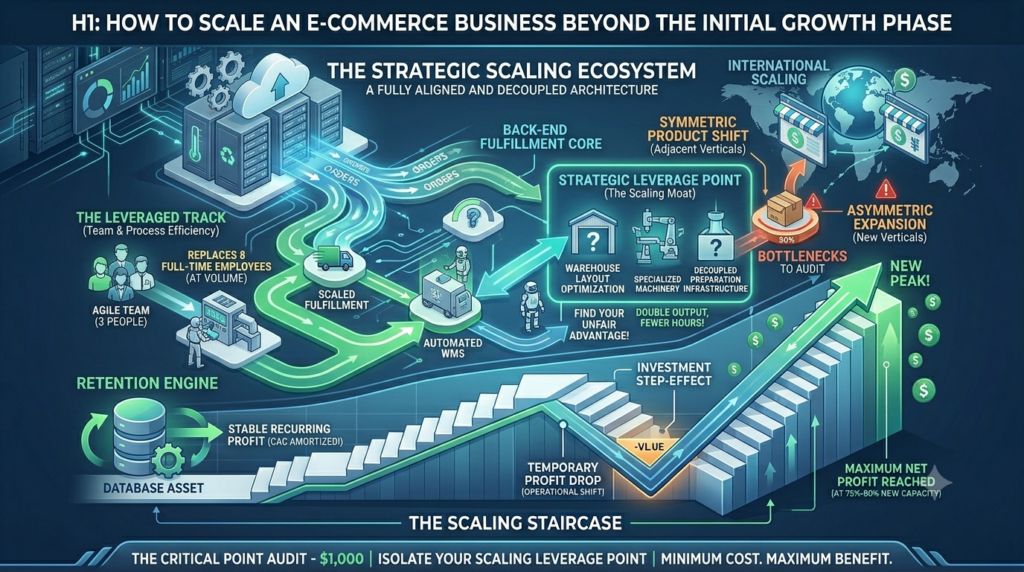
How to scale an e-commerce platform efficiently as sales grow? (USA 2026)

In the U.S. market, scaling is a systems engineering challenge. Once a brand moves past initial growth, the infrastructure must handle high-velocity data and execution. If the platform isn’t built for this, increased sales will lead to operational friction and margin erosion. To scale efficiently, the platform infrastructure must act as a unified engine across

How to scale an e-commerce platform efficiently as sales grow? (USA 2026) Leer más »

Why E-commerces Factoring Over $200k/Month are the Perfect Candidates for Data Science Use Cases

If your e-commerce brand has crossed the $200,000 monthly revenue mark, you are no longer in a growth phase; you are in an efficiency crisis. At this scale, every 1% of operational inefficiency is a $2,000 monthly leak. While generic 2024 guides focus on «knowing your customer,» at $200K/month, Data Science is the essential tool

Why E-commerces Factoring Over $200k/Month are the Perfect Candidates for Data Science Use Cases Leer más »

How to scale e-commerce in the USA effectively?

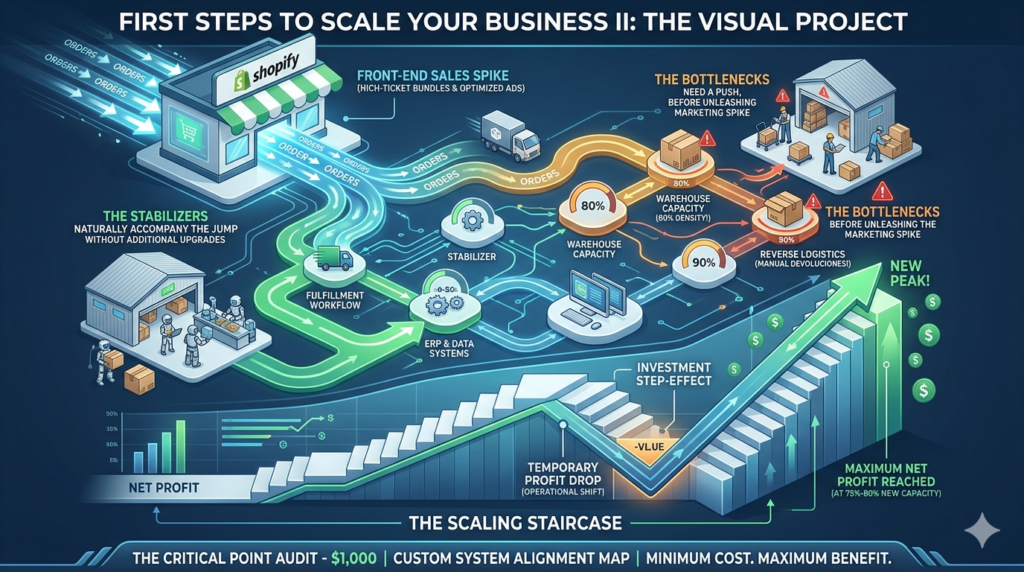
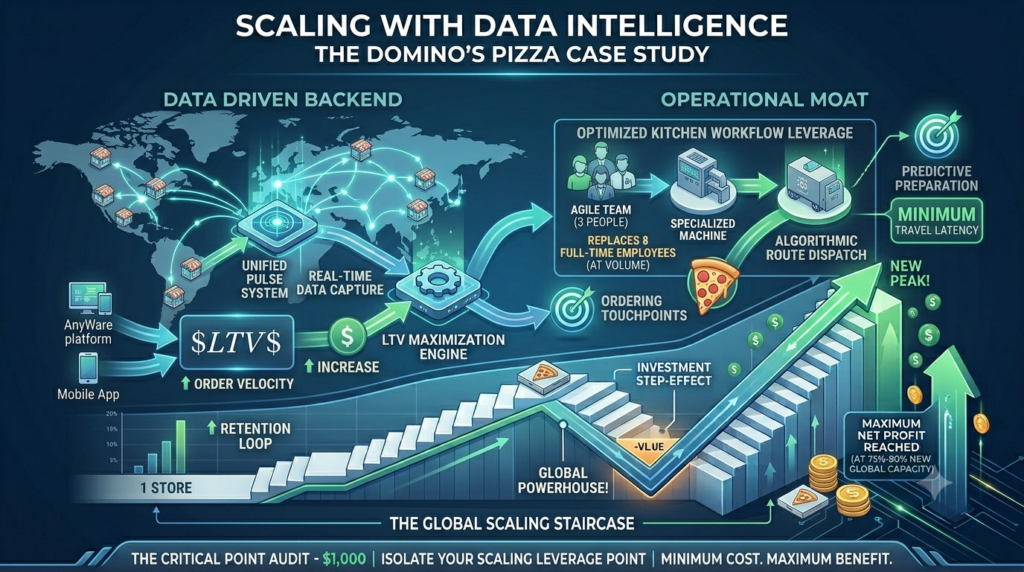
Scaling a US e-commerce brand is not a linear climb; it is a series of architectural leaps driven by data-driven insights. To reach the next «profit peak,» brands must invest in new infrastructure—software, talent, or logistics—which temporarily lowers net margins until the new structure reaches 100% capacity. Effective scaling requires using data science to identify

How to scale e-commerce in the USA effectively? Leer más »

What type of e-commerce brands use data science?

Data science in e-commerce is not a tool for every store; it is the competitive advantage for brands that have moved past «survival mode» and into «scaling architecture.» High-performance brands use data science to transition from reactive marketing to predictive operations, systematically eliminating margin erosion and optimizing inventory liquidity before it becomes a bottleneck. The

What type of e-commerce brands use data science? Leer más »

Big Data vs. Micro Data in E-commerce: Why Averages Hide Real Profit

In e-commerce analytics, the difference between Big Data and Micro Data determines whether you manage trends or exploit opportunities. For years, e-commerce owners have been told to focus on «Big Data.» They invest in dashboards showing averages: average session duration, average order value, average bounce rate. But averages hide opportunity. Big Data identifies patterns across

Big Data vs. Micro Data in E-commerce: Why Averages Hide Real Profit Leer más »

How much profit can data science save my ecommerce?

Data science can save an e-commerce business between 15% and 35% of its annual net profit by eliminating operational waste and structural margin erosion. This is achieved through the automated identification of toxic SKUs, the reduction of inventory carrying costs, and the optimization of ad spend attribution. Implementing high-precision data models transforms hidden losses into

How much profit can data science save my ecommerce? Leer más »

When to start using data analytics for e-commerce?

You should start using data analytics for e-commerce from the first sale to synchronize internal metrics with external market intelligence. While basic tracking serves for launch, advanced data science is required immediately to reverse-engineer competitor success, optimize capital velocity, and identify high-margin growth signals. Implementing a data-driven architecture from day one allows you to learn

When to start using data analytics for e-commerce? Leer más »

What is Data Used for in E-commerce? (2026 Strategic Guide)

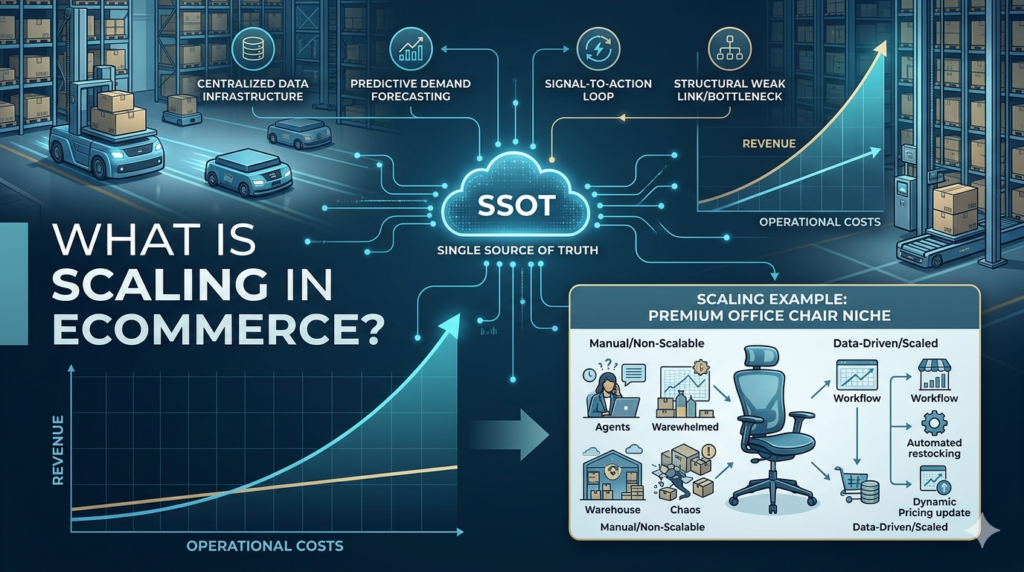
Data in e-commerce is used to transform passive tracking into active execution. In 2026, leading brands use data for predictive demand forecasting, real-time price optimization, and hyper-personalized customer retention. While most stores use data to report what happened, high-performance brands use Micro-Data and curated prompts to identify high-density intent signals and exploit market opportunities before

What is Data Used for in E-commerce? (2026 Strategic Guide) Leer más »